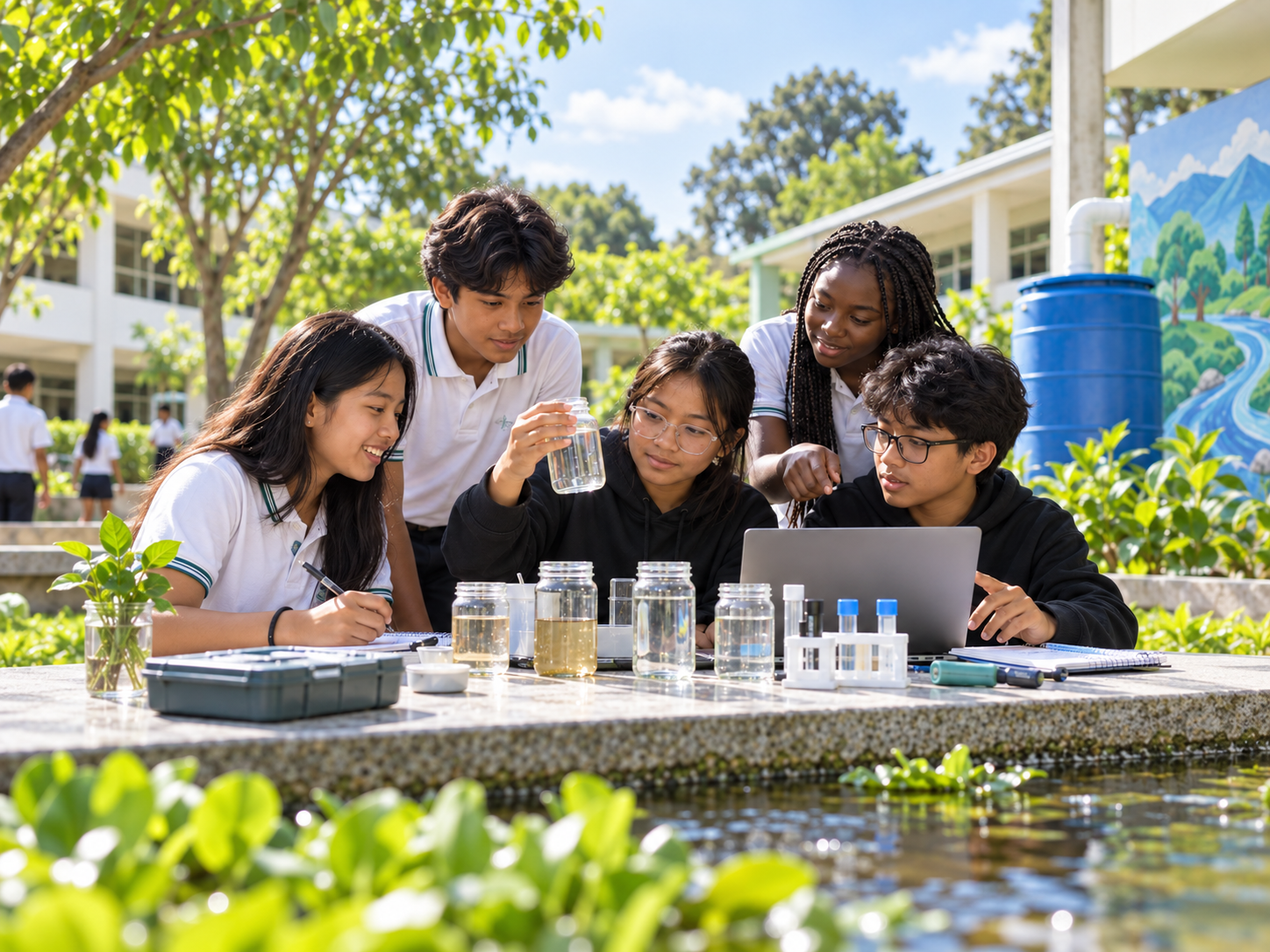
We do not begin by asking students to solve the world’s water crisis. We begin by helping them understand water well enough to care about it, speak about it accurately and recognise where their own curiosity could lead.
The journey follows three clear stages. Education turns familiarity into understanding. Awareness helps that understanding travel from one young person to another. Innovation gives interested students space to investigate, research or create. Schools can begin simply and allow participation to deepen naturally.
Education
Education helps students see the whole story: where water comes from, how it moves through natural and human systems, why communities experience it differently and how climate, infrastructure, behaviour, science and technology shape its future. The aim is not memorisation. It is a new way of seeing.
Awareness
Awareness begins when knowledge becomes personal enough to share. Students may speak in class or assembly, create art, design a presentation, make a short video, organise an exhibition, support an approved fundraiser or lead a community conversation. Their role is not to repeat a slogan, but to help another person notice water differently.
Innovation
For students who want to go further, Innovation creates room to investigate a water question, gather evidence, explore data, use digital tools, develop software or test an engineering idea. A finished invention is not the entry requirement. Innovation begins much earlier, with the courage to ask what could be better and the discipline to investigate honestly.